Shiva Jnane Jiva Seva:
Serving living beings knowing them to be
Divinity
Experience the living tradition of Vedanta as brought to America by Swami Vivekananda.
Shiva Jnane Jiva Seva:
Serving living beings knowing them to be
Divinity
Experience the living tradition of Vedanta as brought to America by Swami Vivekananda.
From 19th Century India to 21st Century North Texas
As the different streams having their sources in different places all mingle their water in the sea, so the different paths which people take lead to the same God.Swami Vivekananda Parliament of World Religions, Chicago 1893
In 1893, a young monk from India electrified the World's Parliament of Religions in Chicago. His opening words—"Sisters and Brothers of America"—received a standing ovation before he even began his speech.
That monk was Swami Vivekananda, and his message of universal harmony forever changed how the West understood spirituality. This center continues his sacred mission.
Here, we offer the timeless teachings of Sri Ramakrishna, Holy Mother Sarada Devi, and Swami Vivekananda. Spiritual seekers of all backgrounds discover their divine nature through meditation, study, and selfless service—transforming ancient wisdom into practical spirituality for modern life.
Help us continue serving the community through spiritual education and service. Your contribution makes a difference.
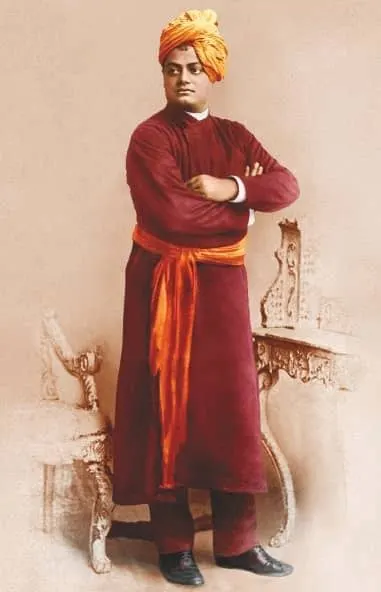
1863-1902
"The monk who brought yoga and meditation to America"
Imagine someone who combined the spiritual depth of a monk with the energy of a motivational speaker and the vision of a social reformer. That was Swami Vivekananda.
Born in 1863 in India, he was a wandering monk who came to America in 1893 and completely changed how Westerners understood spirituality. Before him, most Americans had never heard of yoga, meditation, or the idea that you could find God within yourself.
Picture this: The World's Fair in Chicago. Representatives from religions all over the world gathered to speak. When a young Indian monk in orange robes stood up and addressed the crowd as "Sisters and Brothers of America," 7,000 people gave him a standing ovation—before he'd even said anything else.
Why? Because in 1893 America, nobody addressed an audience that way. It was revolutionary, warm, and inclusive. His message was simple but powerful: all religions are different paths to the same truth. No single religion has a monopoly on God.
American newspapers called him "the greatest figure in the Parliament of Religions." He became an instant celebrity.
Vivekananda's message was surprisingly practical for a monk. Here are his main ideas (translated into plain English):
He constantly told people: "You are divine. You have infinite power within you." This was radical—especially for people told they were sinful or weak. He wanted people to stand up, be confident, and realize their potential.
"Arise, awake, and stop not till the goal is reached."
He didn't think religion was about rituals or beliefs alone. For him, helping others—especially the poor and suffering—was the highest form of worship. "They alone live who live for others," he said.
"Service to humanity is service to God."
He taught that you need both inner spiritual practice (meditation, prayer) and outer action (service, work). Like a bird needs two wings to fly. Don't just sit and meditate—go out and serve. Don't just work without reflection—take time to go within.
He respected all religions—Christianity, Judaism, Islam, Buddhism, Hinduism. He saw them as different paths up the same mountain. This was uncommon thinking in the 1890s (and still is for many today).
Surprisingly for a monk, he told people to play sports, exercise, and build strong bodies. "You will be nearer to Heaven through football than through reading the Gita," he once said. He wanted people strong in body, mind, and spirit.
You might wonder: "Why should I care about a 19th-century Indian monk?" Fair question. Here's why he's still relevant:
Though he died young at 39, his impact was enormous. He founded the Ramakrishna Mission (named after his teacher), which runs hospitals, schools, and disaster relief worldwide. He inspired leaders like Martin Luther King Jr., Nikola Tesla, and countless others.
Most importantly, he showed that spirituality isn't about running away from the world—it's about engaging with it fully, serving others, and discovering the extraordinary power within yourself.
Our center here in North Texas continues his work: offering meditation, study, community, and service—practical spirituality for modern life.
Visit us this Sunday at 11 AM, or explore his teachings through our library and programs.
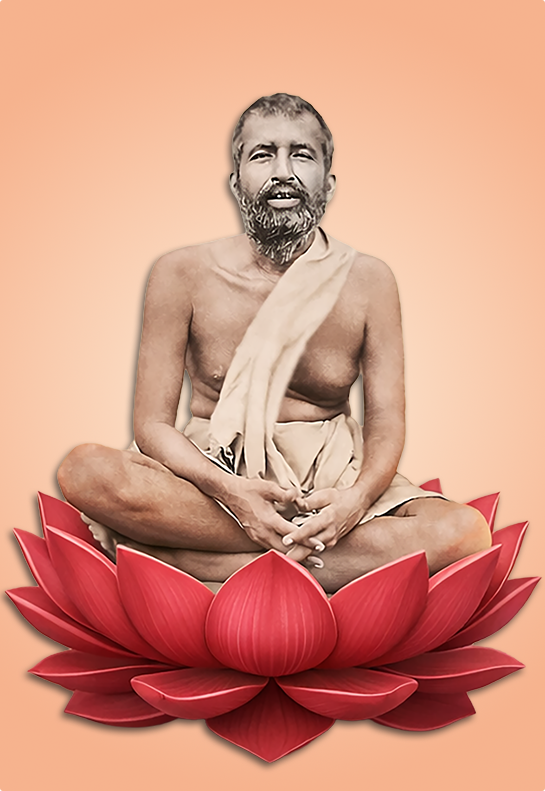
1836-1886
"As many faiths, so many paths"
Sri Ramakrishna was a mystic whose life was one continuous spiritual experience. Born in a small Bengal village, he became a priest at the Dakshineswar Kali Temple near Kolkata and spent his entire life in the direct pursuit and experience of God.
What made him unique? He didn't just believe in religious harmony—he lived it. He practiced Christianity, Islam, and various Hindu paths, achieving spiritual realization through each. His verdict: they all lead to the same divine goal.
Ramakrishna's most revolutionary message was simple: God is not just a concept to believe in—God can be directly experienced in this very life. "The goal of human life is to realize God," he taught.
"The winds of grace are always blowing, but you have to raise the sail."
Having practiced multiple faiths and reached the same divine experience through each, he declared that all religions are valid paths to God. None has a monopoly on truth.
"As many faiths, so many paths."
He taught that the same divine presence exists in every being. When you truly see this, service to others becomes worship, and love for humanity becomes love for God.
"Shiva Jnane Jiva Seva — Serve living beings knowing them to be God."
He emphasized that intense longing for God is what matters most—more than rituals, more than knowledge. Like a drowning person gasping for air, when you yearn for God with that intensity, realization comes.
Discover the life and teachings of Sri Ramakrishna at our Sunday programs.
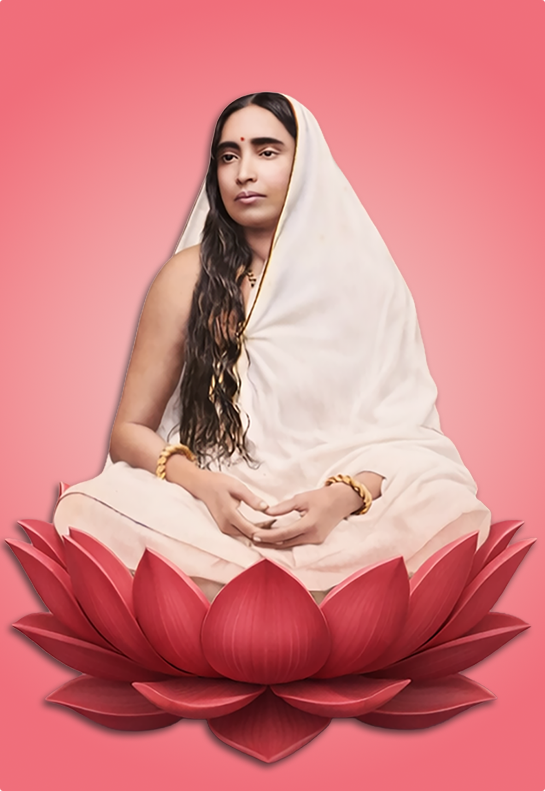
1853-1920
"If you want peace, do not find fault with others"
Sri Sarada Devi, known reverently as "Holy Mother," was the wife and spiritual companion of Sri Ramakrishna. Despite her profound spiritual attainments, she lived a life of extraordinary simplicity, serving others with boundless love and patience.
After Sri Ramakrishna's passing, she became the spiritual guide for thousands, treating everyone who came to her as her own child—regardless of caste, religion, or background. Her love was unconditional and her guidance practical.
She saw all beings as her children. When asked who could be her disciple, she replied, "Everyone." Her love transcended all boundaries of religion, class, and nationality.
"I am the mother of the virtuous, and I am also the mother of the wicked."
She emphasized keeping the mind pure and free from jealousy, hatred, and selfishness. "If you want peace of mind, do not find fault with others," she advised. "Learn to make the whole world your own."
Though revered as a saint, she continued to cook, clean, and serve others throughout her life. She showed that the highest spirituality can be expressed through the humblest daily tasks.
"Work helps one to keep off evil thoughts."
She counseled patience in spiritual life. "One must be patient like the earth. What suffering has not the earth to bear! One must have immense patience if one desires to realize God."
Discover the life and teachings of Holy Mother Sri Sarada Devi.